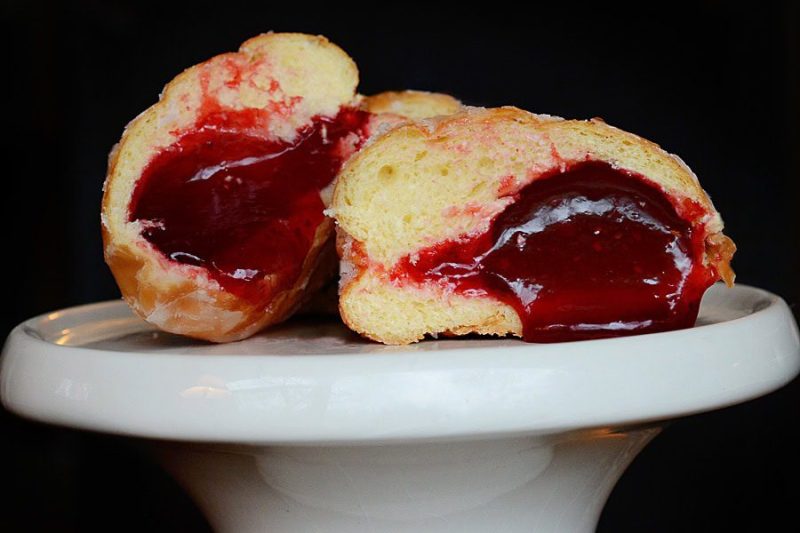
Eating pączki the Tuesday before Lent is a Michigan tradition–but why? Read to find out—and learn where to get some pączki for yourself this year.
In addition to displays of Valentine’s chocolates and roses, Michigan grocery stores have been advertising a certain pastry as of late, recommending that customers place larger orders well in advance of the 17th, the third Tuesday in February.
The 17th isn’t just any Tuesday in 2026, though; it’s Mardi Gras, which explains everything. In New Orleans, Mardi Gras means parades, cocktails, and King Cake. In Michigan, though, the Tuesday before the beginning of Lent calls for something a little different, although just as sweet: pączki! These jelly donuts are an iconic part of Michigan Mardi Gras, and whatever your favorite flavor may be, “Pączki Day,” as some call it, is hard not to love.
But how did this tasty tradition start? How do you pronounce “pączki” anyway? And maybe most importantly, is it too late to get in an order for a dozen in assorted flavors? Let’s have a look and find out:
Know your pączki
So what are pączki exactly? And how do you pronounce the word? Well, first, you should know that “pączki” (pronounced “POONCH-key”) is actually the plural form of the singular “pączek,” pronounced “PON-check”). Admittedly, pączki are too delicious for it to be likely to eat just one!
Pączki are, essentially, jelly donuts, but there’s a bit more to it than that. The words “pączek” and “pączki” are Polish, and pączki themselves are a traditional Polish treat. At first glance, a pączek is very similar to a jelly donut, but the dough is traditionally richer and denser than American-style donuts. The most traditional pączki recipes call for a splash of Polish vodka or rum in the dough, although these days, most varieties are alcohol-free.
The classic pączek fillings are rosehip jelly or plum jam, but you can also find pączki filled with custard, raspberry jam, lemon curd, chocolate cream, and more. There are also traditional recipes that call for a filling made with a sweet, ricotta-like cheese mixture called twaróg, but these can be hard to find outside of Poland unless you bake them at home.
Why Fat Tuesday?
While pączki need no occasion, Michiganders for generations have been enjoying them on Fat Tuesday, also known as Mardi Gras. But why? Well, the tradition of eating rich, sweet foods on Fat Tuesday is found in many countries, and it originated in the Catholic observance of Lent.
In Catholic tradition, Lent is the period from Ash Wednesday until Easter. Historically, Catholics have observed Lent as a time of repentance, prayer, abstinence, and self-denial. Traditional forms of Lent observance have included lengthy periods of fasting, not eating meat during Lent, increased church attendance, and the modern custom some Catholics and Protestants observe of “giving something up,” like a favorite food or game, for Lent. Mardi Gras, or Fat Tuesday, evolved in historically Catholic countries as one last feast before the more restrained period of Lent began.
While fasting in various forms for Lent can look very different depending on who you ask and where you are, in early Christianity, foods forbidden during Lent included alcohol, meat, and dairy. Due to the prohibition on eating dairy, pastries and desserts became popular Fat Tuesday delicacies. That’s where traditional Fat Tuesday dishes like New Orleans’ King Cake, or the crepes served on “Pancake Day” in the United Kingdom, originate, and it’s where we get Pączki Day in the Wolverine State.
Pączki are enjoyed in Poland all year round, but are especially traditional to eat on Fat Tuesday. In the 19th and early 20th centuries, when thousands of Polish immigrants moved to the United States, many settled in Michigan, particularly in the Greater Detroit area. The new Michiganders brought many of their traditions with them, including enjoying pączki on Fat Tuesday. Given how delicious pączki are, it should come as no surprise that the tradition expanded to Wolverines of all backgrounds and religions, whether or not they had any plans to observe Lent, leading to the rise of Pączki Day as we know it today.
Where in the mitten to get your 2026 Pączki Platter
Now that you know where the tradition around Pączki Day comes from, it’s time to eat! But where can you source your Pączki Day treats? While making your own is always an option, these pastries can be very complex and challenging to make, especially if you’re not an experienced baker. Happily, plenty of Michigan bakeries are ready and waiting for your Pączki Day order.
Generally, bakeries ready for Pączki Day tend to be in larger metro areas in the Mitten, especially those with large Polish-American communities, for obvious reasons. In the Metro Detroit area, some of the most famous spots to get a plate of pączki include the New Palace Bakery in Hamtramck, which has been serving up Polish-style treats since 1908, and Detroit’s American Polish Cultural Center, where Pączki Day is one of the culinary highlights of the year. Advance orders are highly encouraged.
In the Western part of the state, Pączki Day treats are especially popular in and around Grand Rapids. Sandy’s Donuts offers eleven different flavors of pączki, including a sweet-and-tart key lime version, while Phoenix Rising Bakery is sure to have the traditional prune variety among its offerings. In Kalamazoo, you can find pączki at Sarkozy Bakery, where flavors include options as unique as chocolate cream and rum custard.
If you’re feeling truly daring, or are a skilled home baker, you can even find recipes online to bake your own Pączki Day treats. But no matter if you like traditional prune-filled pączki or prefer a filling like key lime or chocolate custard, and whether you’re baking or buying, be sure to enjoy Pączki Day with your favorite beverage close to hand to wash down the sweets. Moreover, be sure to save some for friends and family, so everyone can enjoy some of the Pączki Day sweetness!