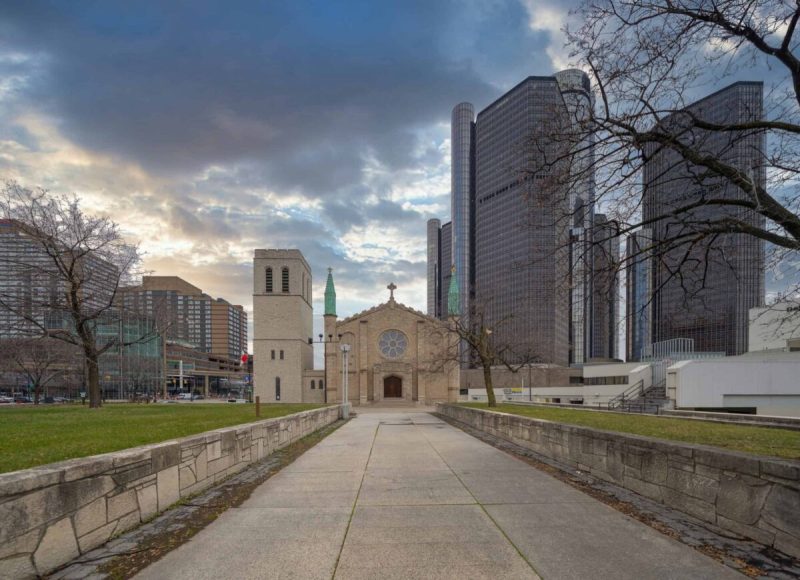
Did you know that Michigan was home to over 200 stops on the Underground Railroad? We traced our state’s history in facilitating steps to freedom.
In honor of Black History Month, we’re taking a closer look at Michigan’s history with the Underground Railroad. The Underground Railroad, which sounds like a physical path, was actually an extensive nationwide network of people and places that worked together to help enslaved people escape to freedom. Some people involved were standalone individuals helping, while others were part of a greater, deliberate, and coordinated effort.
The Michigan History Center explains that the term “Underground Railroad” developed because the people involved in helping enslaved people used code words that included railroad terms like “depot” and “conductor.” Because the ultimate goal for enslaved people was to escape to legal freedom in Canada, Michigan was a crucial “final stop” on the Underground Railroad, often nicknamed “Midnight” as enslaved people escaped through the night to find freedom in the dawn.
According to the Detroit Historical Society, while Michigan officially recognizes 24 Underground Railroad “stops” today, around 200 stops were utilized in Michigan between 1820 and 1865.
Here’s a closer look at some of the historic “stops” on Michigan’s Underground Railroad.
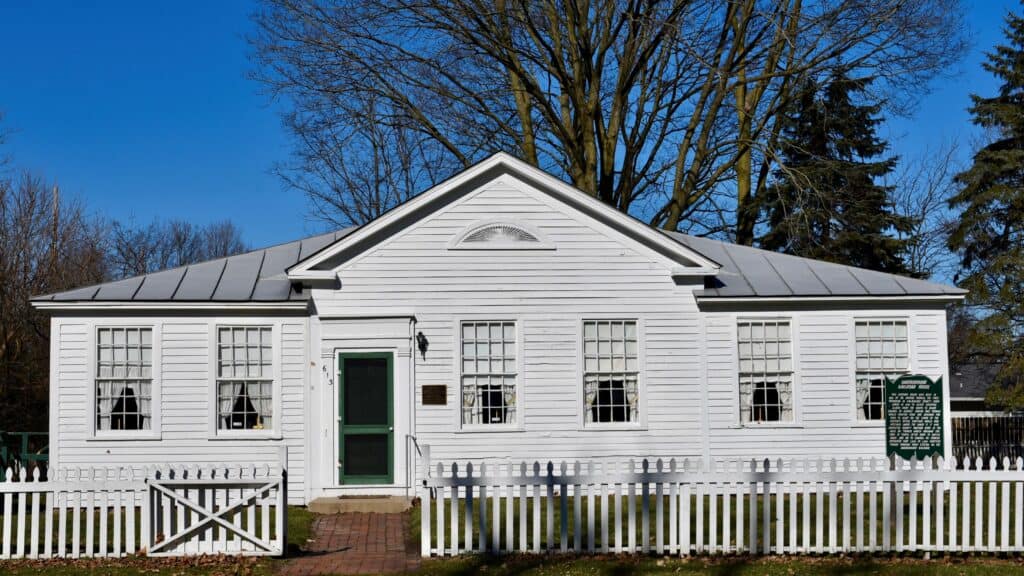
1. Dr. Nathan Thomas House
613 East Cass Street, Schoolcraft, Michigan
The Dr. Nathan Thomas House is one of Michigan’s most famous Underground Railroad stops, probably because it’s one of the most well-known. Its notoriety is largely due to Pamela Brown Thomas, who covered her and her husband, Dr. Nathan Thomas’ work within the Railroad in her memoirs.
She documented how she and her husband helped between 1,000 and 1,500 enslaved people seek freedom. Pamela and Dr. Thomas were the ultimate power couple working for freedom, as the doctor provided free medical care and Pamela cooked up meals to feed weary travelers along their way. You can visit the Nathan Thomas Underground Railroad Museum, but tours are by appointment only.
2. Stephen and Hannah East Bogue House
M-60 and Crooked Creek Road, Cass County, MI
Cass County, Michigan, was a bustling hub of activity for freedom seekers and Underground Railroad workers alike. According to the Underground Railroad Society of Cass County (UGRR), the area had such an active presence because of the large majority of Quaker individuals and families that settled here. Quaker beliefs centered around equality and viewed slavery as sinful, so many Quakers became involved in the abolitionist movement.
Husband and wife Stephen and Hannah Bogue were two such Quakers who devoted themselves to working towards equality through the Underground Railroad as “stationmasters.” Their home served as a well-known stop for freedom seekers, and they served as allies to many. One cabin that the Bogue’s built to harbor escaped slaves was even part of the Kentucky Slave Raid, and Stephen was called as a defendant in the ensuing lawsuit (when slave catchers tried to sue for “losses”).
Tours of the Bogue House, along with the Bonine House and Carriage House—two other prominent Underground Railroad stops in Cass County—are available by appointment from October to May, on weekdays from 2 p.m. to 5 p.m. You can also take a self-guided tour of 20 UGRR sites through Cass County.
3. Erastus and Sarah Hussey Store and House
One Michigan Ave, Battle Creek, MI 49017
Fellow Quakers Erastus and Sarah Hussey moved to Michigan from New York and purchased land to open a dry goods store and their home. That home later became an important stop on the Underground Railroad, with both Husseys advocating for freedom and equality in their communities and more broadly.
For instance, Hussey went on to serve in the state legislature, was editor of the anti-slavery Michigan Liberty Press, and even helped at the famous “Under the Oaks” convention that launched the Republican Party. Hussey’s store and home no longer stand, but the site of the Underground Railroad stop is commemorated by a plaque where it once stood, now the location of the Kellogg Foundation’s headquarters.
4. New Hudson Inn
56870 Grand River Ave., New Hudson, MI
Established in 1831, New Hudson Inn is Michigan’s oldest operating restaurant and a rumored stop on the Underground Railroad. The restaurant, which started as a stagecoach stop, is even older than Michigan itself, which became a state in 1837. During the inn’s renovations in 2016, a false floor and a small, hidden room in the attic were discovered, which led to further belief that the inn helped hide and house enslaved people. The owner preserved the false floor, and it’s now on display for patrons to view as they dine.
The bar is still fully operational, and you can visit Monday through Saturday for lunch and dinner (they specialize in burgers and sandwiches) or swing in on Sundays for some breakfast specials. The inn is currently in the process of seeking official recognition from the National Park Service’s Network to Freedom program.
5. Finney Hotel
Seymour Finney owned the Finney Hotel in downtown Detroit and helped enslaved people hide and continue on their routes to freedom. He was known for hiding slaves in the stable on his property, located at the northeast corner of State and Griswold streets.
The stables were demolished in 1892, and a building was constructed that now houses the Detroit Chamber of Commerce. There is a plaque at the site commemorating its involvement with the Underground Railroad.
6. The T. Whitney steamship
The T.Whitney was a steamship purchased by Detroit businessman George DeBaptiste. DeBaptise was an African American born to free parents who ended up running several businesses in Detroit. For instance, he started as a barber in his teens, owned a bakery, and was later hired as General William Henry Harrison’s personal valet. During Harrison’s short-lived presidency (he died 32 days into office), DeBaptiste also worked as Harrison’s steward. DeBaptise was heavily involved in the Underground Railroad and other abolitionist movements, including a lawsuit he worked on that challenged Indiana law requiring free Blacks to pay $500 for residence.
His work with the Underground Railroad forced him to Detroit, where he purchased the T.Whitney steamship. Because Black men were not allowed to pilot ships, DeBaptise hired a white man as his captain. The ship was instrumental in ferrying “black wool,” a.k.a. enslaved people, to Canada along the Detroit River.
Sadly, no records exist of what happened to the T. Whitney, but you can visit the site of DeBaptise’s home at East Larned and Beaubien streets in Detroit. (The area is commemorated by a Michigan Historical Society marker.)
7. Second Baptist Church
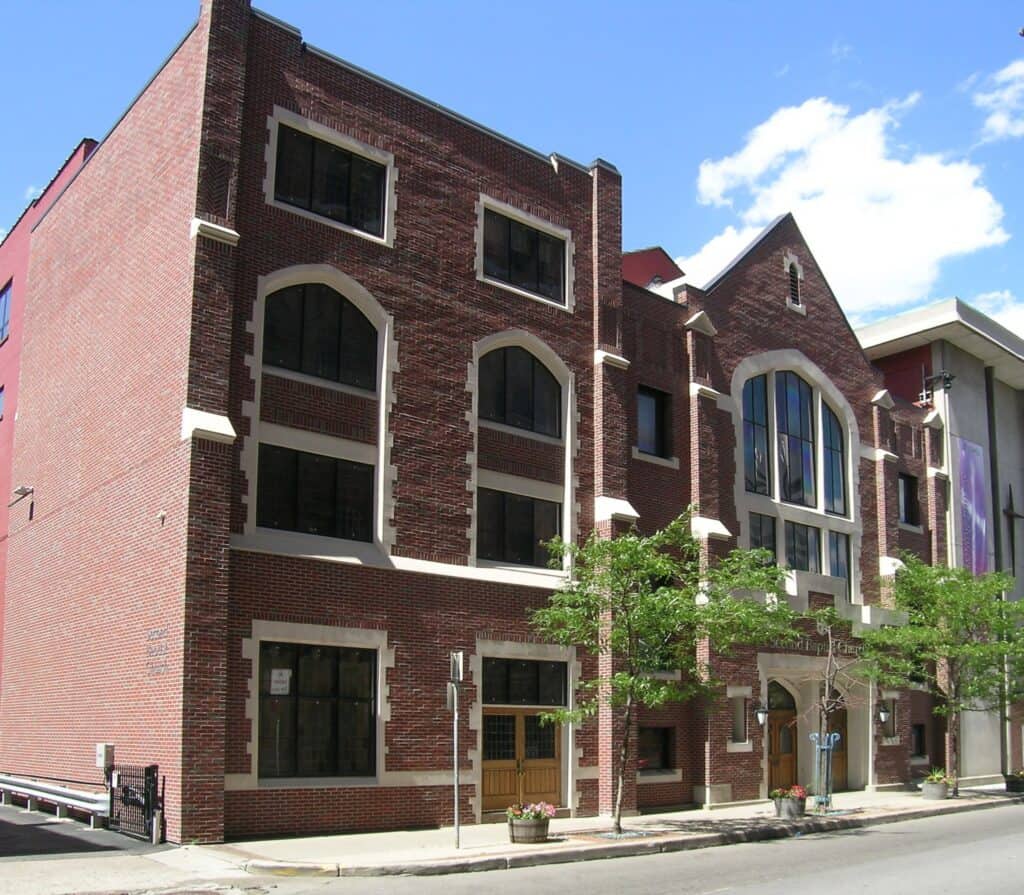
441 Monroe Street, Detroit, MI 48226
Second Baptist Church, which still hosts weekly services, is the only Detroit Underground Railroad “stop” that you can visit in its original location. Known as Coghan Station, Second Baptist Church played a key role in housing, clothing, feeding, and serving as a sanctuary to a growing Black migrant population. The church’s history says it helped 5,000 enslaved people reach Canada. You can still visit the church and even take a tour of it.
Second Baptist is the oldest Black church in Detroit and the oldest Black-owned religious institution in the entire Midwest. In addition to directly assisting enslaved people, the church also played a prominent role in the abolitionist movement. For example, it hosted Fredrick Douglass in a speech he gave before working with John Brown and planning a public reading of the Emancipation Proclamation.
William Lambert was a founding member of the church and later founded another influential Detroit Black church, St. Matthew’s Protestant Episcopal Mission. Lambert also worked with George DeBaptise to develop codes that included secret handshakes within the Order of the Men of Oppression that further helped enslaved people escape.
8. Mariner’s Church
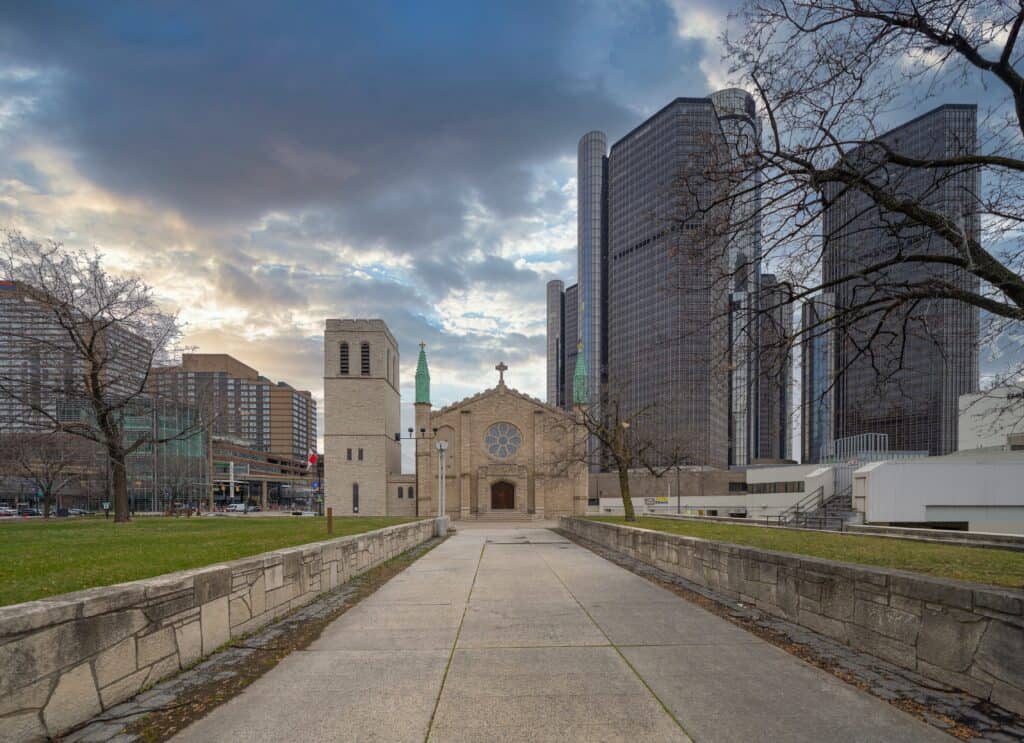
170 E. Jefferson Ave, Detroit, MI 48226
The original Mariner’s Church in Detroit was located right on the Detroit River. When the building was moved in 1955, construction workers discovered a secret underground tunnel that connected to Canada, allowing freedom seekers to escape.
The location of the original church is now somewhere within the Woodward Ave area civic center, which hosts conventions, events, and meetings. I have been to many a volleyball tournament there with my daughters, and it gives me goosebumps to realize I have walked the very routes that freedom seekers and their allies did. The Mariner’s Church still stands, although it has been moved, and you can visit, partake in a service, or schedule a tour.
9. Tommy’s Detroit Bar & Grill
624 3rd St. in Downtown Detroit
Tommy’s Detroit Bar and Grill, built in 1840, only a few years after Michigan became a state, serves up cold beer and delicious burgers with a side of history. A tunnel beneath the bar is rumoured to have served as an escape route during the Underground Railroad. The tunnel also offered “freedom” during another period of history, as it’s also said to be a part of a Prohibition smuggling route.
The bar and grill is still very much open for business and also offers tours for those interested in its historical past.
10. First Congregational Church of Detroit
33 East Forest Ave. Detroit, Michigan
The First Congregational Church of Detroit (when it was originally constructed) was a stop on the Underground Railroad, as people hid in the basement. Today, the church serves as a living museum, shedding light on the Railroad’s history. The tour includes information on the routes freedom seekers would take, how they would hide, and highlights different stops and safe houses along the way. A warning may be warranted, as “passengers” are shackled with wrist bands as part of the experience.
You can book a tour online or call for groups of 20 or more. The current church is not the original church that harbored freedom seekers, but was erected in 1891.
11. William Webb Harwood Farm
6356 Michigan Ave., Ann Arbor, MI 48108
The William Webb (W.W.) Harwood Farm was a literal stop and refuge for freedom seekers, as three local farmers, including Harwood, kept wagons and hay, among other supplies, to hide enslaved individuals as they escaped. While several farmers were involved in the abolitionist efforts, only the Harwood farmhouse still exists. The farmhouse is a private residence, so it’s not open to the public at this time.
12. McCoy Cabin Site at Starkweather Farm
1266 Huron River Drive, Ypsilanti, MI 48197
The McCoy Cabin was home to George and Mildred (Millie Goins) McCoy, who were both born into slavery. While George was freed as a toddler, Millie remained enslaved. After the two married, they escaped to Canada and later returned to Yspilanti to settle into a cabin on John and Mary Ann Starkweather’s farm.
George worked in many ways aiding escaped slaves, but he may be most well known for starting a cigar business and hiding slaves under the cigar boxes when he drove his shipments around for delivery. Yspilanti was a frequent stop for slaves escaping from Kentucky.
The McCoys raised 12 children, several of whom were deeply involved in the freedom movement. One of their children was Elijah McCoy, who invented automatic lubrication and is the origin of the phrase “the real McCoy.”
The McCoy cabin no longer exists, but the Starkweather’s farmhouse does still stand. It’s not open to the public, but it does run occasional tours.
13. Greensky Church and Cemetery
8484 Green Sky Hill Rd, Charlevoix, MI 49720
The Greensky Hill Church cemetery is the final resting place of William Swan, a Black man who escaped life as a slave in Virginia in the 1850s. He and his wife, along with their infant daughter, sought refuge near Lake Charlevoix, where they built a log cabin and a life in close communion with the local Little Traverse Bay Bands of Odawa Indians.
The Little Traverse Bay Bands of Odawa Indians belonged to the Greensky church, and when William was murdered by racist anti-abolitionists in Traverse City, the tribe and other congregation members rescued his body and buried him. Swan is the only non-Indigenous and Black person to be honored with a burial in the Greensky cemetery.
There are 24 officially recognized “stops” on the Michigan Underground Railroad, so if you’d like to learn more or plan your own tour of the visitable stops, you can visit Michigan’s Freedom Trail Commission for more information. They even have an interactive map that lets you take a virtual tour. I spent an entire evening reading about the fascinating lives of the brave men and women who stood against slavery and worked in the effort to create a true land of the free.
This article first appeared on Good Info News Wire and is republished here under a Creative Commons license.
Related: 9 Experiences That Celebrate Black History in Michigan